Starlink Satellites Darken National Parks
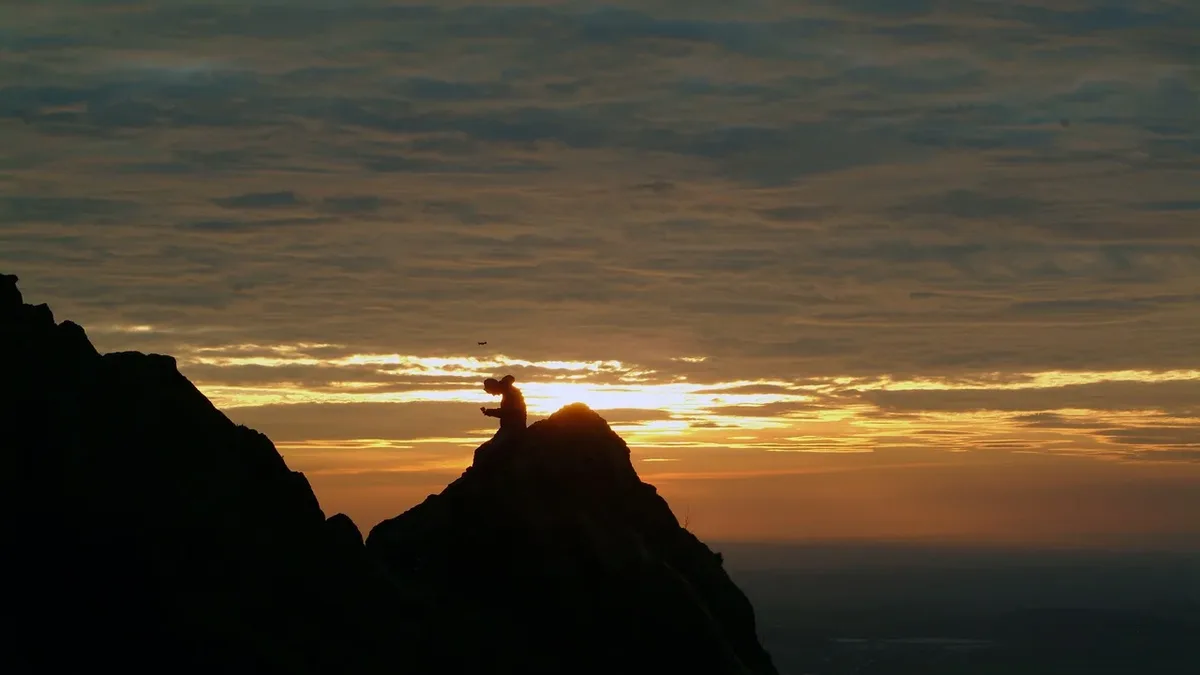
Starlink satellites are blinding night skies over Yellowstone and Grand Canyon, according to stargazing guide Alexandra Trunnell, who reports seeing the first satellite within minutes of a stargazing session. The surge from a few thousand satellites in 2019 to more than 15,000 today, largely driven by SpaceX's Starlink, has turned the sky into a moving light show that disrupts stargazers, wildlife and scientific observations.

Starlink satellites are blinding night skies over Yellowstone and Grand Canyon, according to stargazing guide Alexandra Trunnell, who reports seeing the first satellite within minutes of a stargazing session. The surge from a few thousand satellites in 2019 to more than 15,000 today, largely driven by SpaceX's Starlink, has turned the sky into a moving light show that disrupts stargazers, wildlife and scientific observations.
From Rare to Constant
Trunnell, the lead astronomer for Yellowstone Safari Company, recalls that in 2019 there were fewer than 3,000 active satellites orbiting Earth. Today that number has climbed to over 15,000, the majority of which are Starlink satellites launched at unprecedented frequency. The first Starlink launch in May 2019 deployed 60 satellites in a string-of-pearls formation, and the FCC had approved 12,000 for the megaconstellation. By 2030, forecasts predicted more than 100,000 satellites, a figure that is now growing daily.
| Year | Active Satellites |
|---|---|
| 2019 | <3,000 |
| 2023 | >15,000 |
SpaceX’s ambition has expanded further. In January 2026 the company applied for a license to launch one million satellites that would serve as AI data centers in low Earth orbit. Meanwhile, Reflect Orbital has received FCC permission to test a plan that could launch up to 50,000 satellites acting as flying mirrors to reflect light down to the ground.
The rapid rise in satellites is reflected in the stats that show an increase from under 3,000 in 2019 to over 15,000 today.
Impact on Nature and Science
The natural nighttime environment in parks such as Yellowstone and Grand Canyon is essential for ecosystems, the food web and human health. Studies show that satellite-reflected light disrupts the behavior of migratory species, including birds, pollinators and sea turtles. Creatures that navigate by the stars use a centre of rotation around the pole star; satellites increase background sky brightness, causing confusion and disorientation.
DarkSky International’s program manager Michael Rymer notes that while land within national park boundaries is protected, the sky above is not. “I couldn’t just build a gas station in the middle of Grand Canyon National Park,” he says, “but I could release 10,000 satellites that would fly above every national park at any given time of the night.”
Astrophotographers such as Bettymaya Foott, whose work has appeared in National Geographic and Sky & Telescope, describe satellites as “visible scars” that mar the natural rhythm of the night sky. Ground-based observatories also suffer; satellites add noise to precise brightness measurements, jeopardizing scientific data.
| Company | Planned Satellites |
|---|---|
| SpaceX | 1,000,000 (AI data centers) |
| Reflect Orbital | 50,000 (flying mirrors) |
Conservation and Legal Gaps
The only existing legislation on satellites is the 1967 Outer Space Treaty, which covers weapons and very general concepts. Private space companies can launch satellites with FCC clearance, even if the launches disrupt skies over foreign countries, scientific telescopes or protected natural places. DarkSky International has issued an open letter to Reflect Orbital and its investors urging them to pause their plans until an environmental impact assessment has been undertaken.
Trunnell’s tours, detailed in our fixtures, often begin with a laser pointer that guides guests through Orion and Cassiopeia. Yet the same nights are now punctuated by drifting white lights that outshine the stars.
The open letter to Reflect Orbital remains a call for pause until an environmental impact assessment is completed.