PCT Hiker's Day on Trail: Sitkum Creek Camp
A Pacific Crest Trail hiker covers 17.8 miles from Lake Sally Ann to Sitkum Creek, navigating dry creek beds and power management issues while encountering

A Pacific Crest Trail hiker logged 17.8 miles from Lake Sally Ann to Sitkum Creek, according to a daily journal published on The Trek. The day involved a 2,715-foot climb and a 4,274-foot descent under sunny skies ranging from 46 to 67 degrees Fahrenheit.
The Morning's March
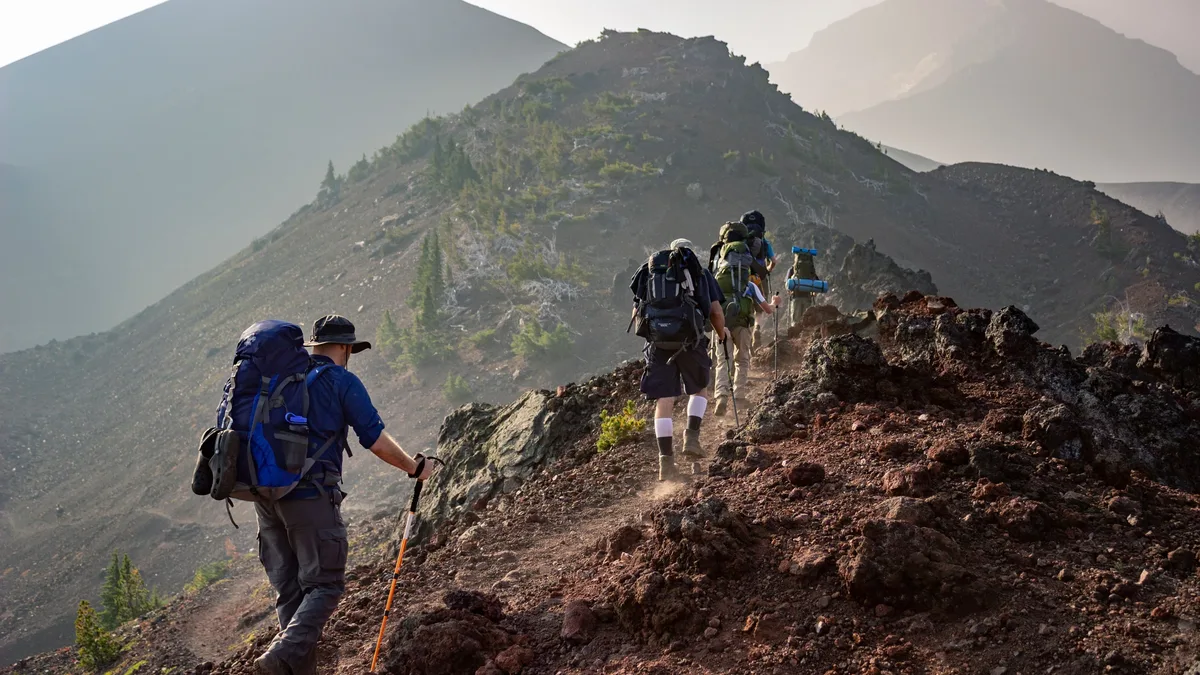
Most of the previous night's dinner group woke early to begin hiking. The hiker reported crisp, clear conditions, a change from the prior day's cloudiness. The trek was punctuated by unfamiliar, loud shrieking sounds from marmots, a vocalization the hiker had not noted before in Washington.
The terrain opened up approaching White Pass. Layers of smoke were visible far to the east from the pass. Descending from it, Glacier Peak dominated the view ahead. The hiker slowed progress to repeatedly photograph the peak and the valley.
Trail Encounters and Camp
After roughly 12 miles, the hiker stopped for lunch at a creek to soak their feet. A later break was taken near Baekos Creek, where another hiker known as Shoe Goo joined them. Shoe Goo shared that he had hiked the Appalachian Trail approximately seven years ago and was on the PCT to finish 600 miles missed in 2024 due to fire closures.
The day's endpoint was a campsite near Sitkum Creek. The FarOut app indicated a large creek there, but the hiker found a dry creek bed with a bridge. They chose the flat, beautiful site in the trees, deciding to stretch their water supply as the next campsite was miles ahead. Fellow hiker Eugenia stopped by the tent; she expressed her love for the wooded area.
The hiker later fetched water from a creek about 0.2 miles away. This resolved concerns about rationing. Only one southbound hiker was seen after lunch, compared to ten spotted in the morning.
Gear Adjustments and Issues
A power problem emerged. The hiker realized one battery pack was not fully charged before starting and was already empty. This pack was the only one capable of charging their watch. In camp, they managed a slow transfer of power from an old battery pack to the new one, hoping it would be enough for the watch.
A pillow experiment was also underway. Dissatisfied with a stuff sack, the hiker tried a new configuration using an inside-out sleeping bag compression sack filled with a sit pad, thermal shirt, and puffy jacket. The initial feel was more promising.