Mooney Falls Demands Permit, Skill, Nerve
A 200-foot waterfall in the Grand Canyon requires a $450 permit and a treacherous descent involving tunnels, chains, and ladders.
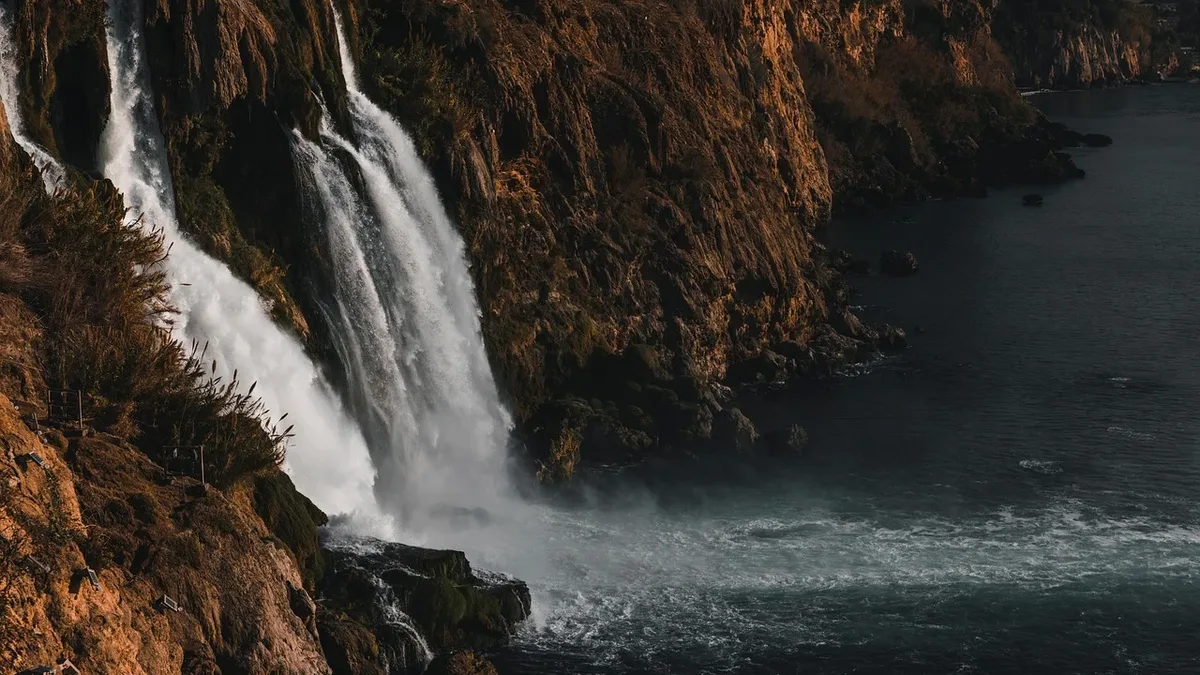
Mooney Falls is a 200-foot waterfall within the Grand Canyon's Havasupai Indian Reservation. Reaching it requires an advanced permit costing around $450 and an 11-mile hike from the Hualapai Hilltop trailhead.
Permit sales for the area typically open each February and can sell out in minutes. The journey to the falls is not just a long walk. It involves a technically demanding and dangerous descent down the travertine cliff beside the cascading water.
The Descent to the Pool
The climb down Mooney Falls is not for the faint of heart. It begins with two tight, hand-carved rock tunnels. Below these, a pile of discarded gloves marks the start of a section where climbers must grip wet metal chains pinned directly into the rock.
Spray from the waterfall keeps the chains perpetually slick with moisture and mud. Maintaining three points of contact is crucial here. Past the chains, a series of wooden ladders anchored to the cliff wall complete the descent. The entire climb down takes about 15 minutes, but it is far from easy.
Risks and Rescue Realities
The hike is sketchy whether you’re afraid of heights or not. A fall carries a severe risk of life-threatening injury. Rescues in remote Havasu Canyon are complex and can be significantly delayed.
Injuries and deaths have occurred here. In 2010, a 32-year-old man from Utah was swept under the waterfall while swimming. Two years later, in 2012, a 16-year-old Boy Scout from Utah drowned in the pool. A man fell and broke his back near the falls in 2026 and required a difficult backcountry rescue. The earliest recorded fatality was prospector D.W. James Mooney, who fell to his death in 1882.
The Reward and Its Dangers
Reaching the bottom reveals turquoise pools that feel more like the South Pacific than the American Southwest. Swimming is possible, but powerful undercurrents pose a serious threat. These currents have sucked even experienced swimmers under and have killed people in the past. Visitors are warned not to swim directly under or behind the falling water.
The author, who admits to a fear of heights, visited during a June heatwave and was blown away by the sight. Despite the dangers, they would do the hike again. The towering falls, which are taller than Niagara, offer a stark and dramatic contrast to the deep desert reds of the canyon walls. It is a demanding adventure that gates itself with a costly permit and a real test of nerve.