Navigating Mahoosuk Notch and the Arm on the Appalachian Trail
A hiker recounts the challenges of swapping a lightweight Hyperlite pack for a larger Gregory pack while tackling the infamous Mahoosuk Notch and the Arm, highlighting the physical demands, gear decisions, and moments of solitude at Speck Pond.
The trek began with a practical dilemma: whether to send a battered Hyperlite pack home or keep it and continue with the larger Gregory "Monster" pack. The Hyperlite, left in a hiker box at the Welcome Hiker Hostel in Glencliff, had been used for a multi-day section of the trail, carrying a tent, sleeping mat, quilt, rain gear, food, water, and a liter of water, totaling sixteen pounds. While the lightweight pack earned nods of respect from fellow hikers, the Gregory proved indispensable for the upcoming 400-mile stretch, especially after the Hyperlite reached its capacity with three days of food and began to strain the hiker’s shoulders.
Gear Swap at Libby Hostel
At the Libby Hostel, the decision was made to part with the Hyperlite, gifting it to a fellow hiker named Medicine Woman. After a communal dinner and breakfast, the hiker emptied the Hyperlite, sorted essential items, and repacked the remaining gear-scissors, a Zpacks folding brush, and doxycycline-into the hiker box. Transitioning to the Gregory felt like a relief, likened to receiving a friendly wag from a St.
Bernard. The larger pack, though heavier, offered the necessary space and durability for the demanding sections ahead.
Confronting Mahoosuk Notch
The group’s conversation at the Libby kitchen table turned to Mahoosuk Notch, a notorious section of the trail often described as a test of endurance. One hiker warned that Maine seemed intent on “killing them,” while another advised securing all gear tightly to avoid losing items in the abyss between boulders. Approaching the Notch with five days of food, the hiker anticipated heat but encountered an unexpected chill at the bottom.
After collapsing poles and stowing them securely, the hiker began the ascent, navigating a series of massive boulders that alternated between sun-warmed surfaces and shadowed cold spots.
The first climb involved gripping a car-sized boulder, feeling the contrast between its rough, cold stone and the familiar foam handles of the poles. As the hiker progressed, mist rose from deep crevasses, and the physical effort of crawling under and over the boulders highlighted the advantage the Gregory provided over the lighter Hyperlite. An hour into the Notch, a cold water flow prompted the hiker to filter half a liter using a Sawyer filter and a CNOC bag, noting the water’s biting temperature but also its refreshing quality.
Throughout the Notch, the hiker unshouldered the Gregory three times-twice to push it ahead while crawling under truck-sized slabs and once in a narrow passage where both the pack and the hiker could not fit simultaneously. The entire Notch segment took roughly two and a half hours, but the hiker described the experience as a “blast,” despite the physical strain.
The Arm: Steep, Rocky, and Tedious
Following the Notch, the trail continued onto the Arm, a steep and rocky section characterized more by its tedium than its excitement. The hiker noted that while the terrain was familiar, the Arm demanded time and persistence rather than the adrenaline-filled moments of the Notch.
Rest at Speck Pond
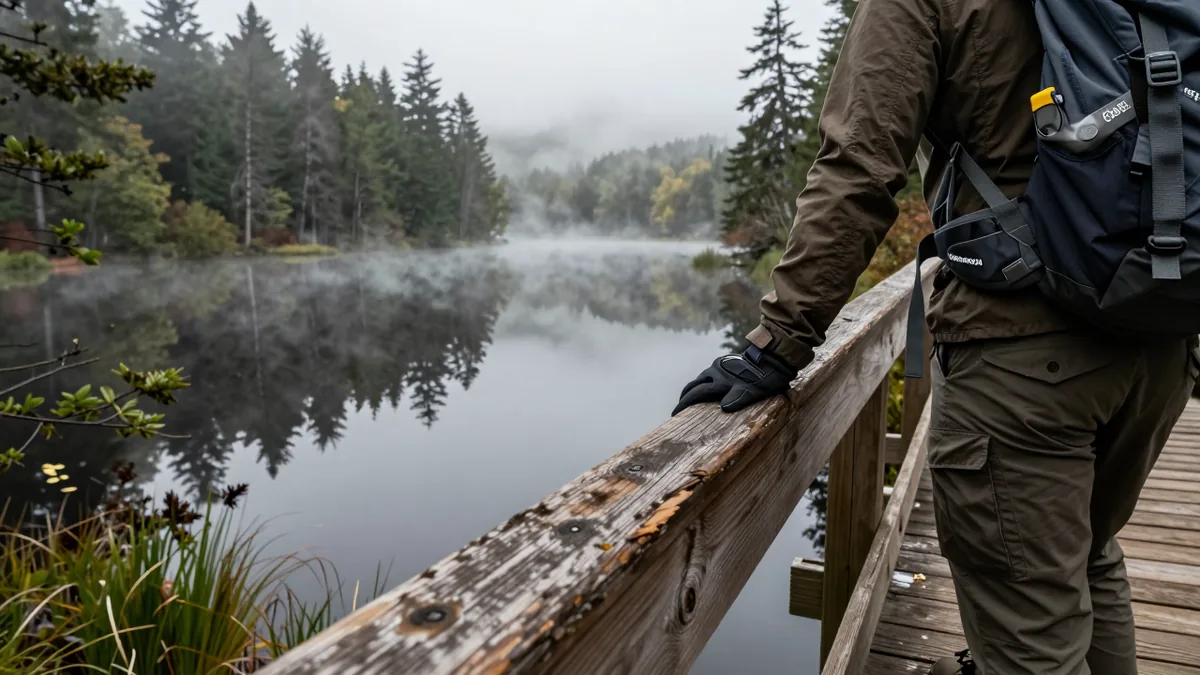
Emerging from the Arm, the hiker arrived at Speck Pond, a tranquil outflow surrounded by rocks and a clear view across the water. After a brief pause to locate the shelter and campsite, the hiker chose a secluded tent platform, set up the tent, and filled the CNOC bag at a spring. The hiker then ventured to the pond’s edge, removed shoes and socks, and waded calf-deep among lily pads before diving in.
The cool, sepia-tinted water provided a refreshing cleanse, allowing the hiker to wash away sweat and grime.
While seated on a granite boulder, the hiker observed two dragonflies circling the shoreline before darting away. After twenty minutes of quiet observation, the sounds of other hikers approaching signaled the end of the solitary moment. The hiker returned to the tent, navigating the rocky terrain carefully, feeling grateful for the water, the rest, and the progress made on the Appalachian Trail.
Source: The Trek